
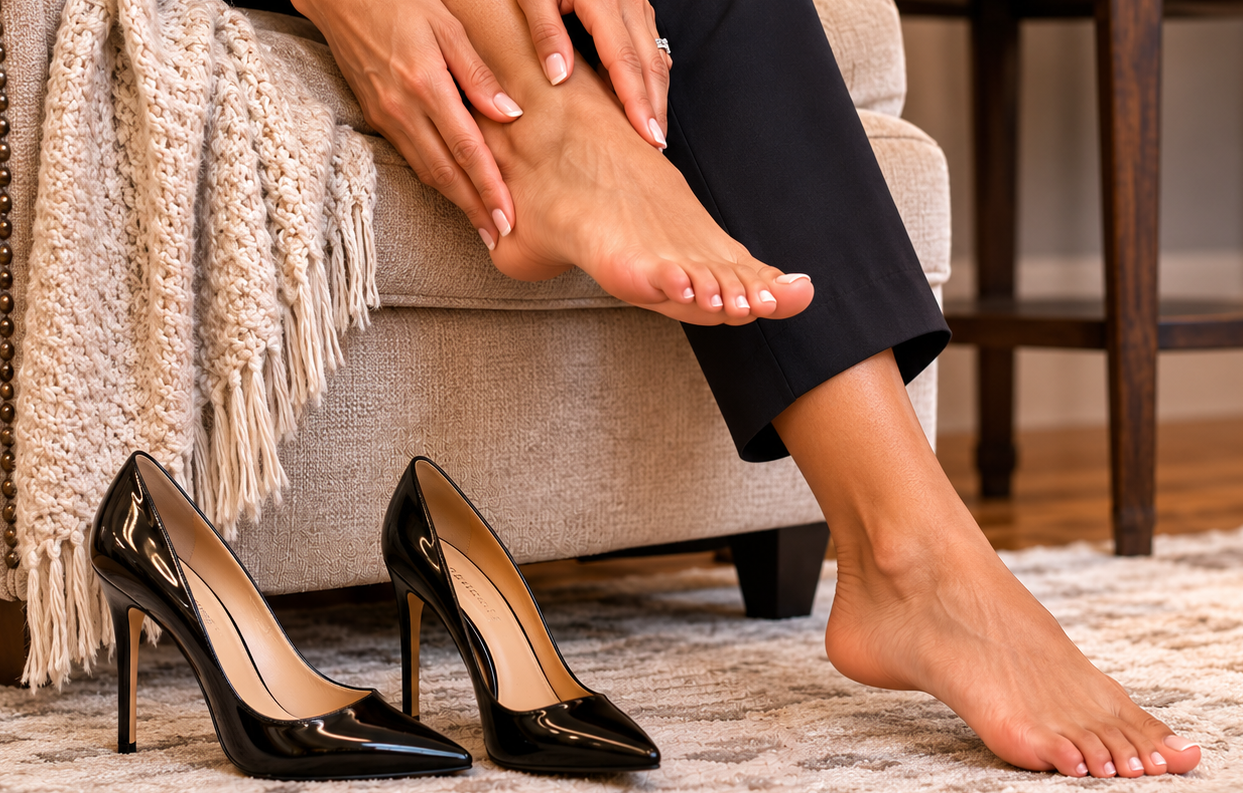
Your feet carry you through every single day, yet they are often one of the most overlooked parts of a regular grooming routine. Good foot hygiene isn't only about having pretty toes. Keeping your feet clean, your skin cared for, and your toenails properly trimmed can help prevent discomfort and unnecessary trauma to the feet and toenails.
Don't Let Your Toenails Become Overgrown
Toenails should be trimmed regularly and should not be allowed to grow excessively beyond the end of the toe.
When a toenail becomes too long, it can repeatedly hit or press against the inside of your shoe while you walk. That constant pressure can cause trauma to the nail and surrounding tissue.
Over time, repeated pressure and trauma may contribute to problems such as:
-
Thickened toenails
-
Tenderness or discomfort
-
Lifting or separation of the nail from the nail bed
-
Changes in the appearance or color of the nail
-
Increased risk of the nail catching or breaking
A toenail that repeatedly strikes the front or top of a shoe can become damaged even when there wasn't one obvious injury. Sometimes the trauma happens gradually.
Pay Attention to Changes in Your Toenails
Changes in a toenail should never automatically be assumed to be "just fungus."
Trauma can also change the appearance of a toenail. Depending on the type of injury, you may notice discoloration, darkening, yellowing, thickening, lifting, or other changes in the nail.
However, a new or unexplained dark line, persistent discoloration, bleeding, pain, or a nail that is separating from the nail bed should be evaluated by an appropriate healthcare professional. Nail discoloration can have many causes, and some require medical attention.
Your Shoes Matter More Than You Think
Properly fitting shoes are an important part of maintaining healthy feet and toenails.
Shoes that are too short, narrow, or tight in the toe box can repeatedly compress the toes and nails. This becomes especially important for people who spend long hours standing or walking, when the feet may naturally swell during the day.
Your shoes should provide enough room for your toes to move comfortably and accommodate the socks you normally wear without your toes being pushed against the front of the shoe.
Poorly fitting footwear may contribute to or aggravate problems such as:
-
Ingrown or involuted toenails
-
Nail trauma and thickening
-
Corns and calluses
-
Toe deformities
-
Bunions
-
Painful pressure points
-
Changes in the way a damaged toenail grows
Buying a larger shoe isn't automatically the answer—a shoe that is too large can allow the foot to slide and create a different type of repetitive trauma. Proper fit, adequate length, and a roomy toe box are what matter.
Good Foot Hygiene Should Be Part of Your Routine
Healthy feet require regular attention, not just an occasional pedicure.
Wash and thoroughly dry your feet, including between your toes. Keep your toenails maintained at an appropriate length, wear clean socks, choose properly fitting footwear, and regularly look at your feet and toenails for changes.
And remember: a professional pedicure should be about more than polish.
A qualified nail professional can help maintain the appearance and grooming of your feet and toenails and may recognize changes that should be referred to a healthcare professional. Nail professionals do not diagnose medical conditions, but we can encourage clients to seek appropriate medical care when something doesn't look right.
Don't Wait Until Your Feet Hurt
Foot and toenail problems can develop slowly. Something as simple as an overgrown toenail repeatedly pressing against a shoe can eventually become a much bigger problem.
Regular grooming, properly maintained toenails, good hygiene, and correctly fitting shoes can go a long way toward keeping your feet comfortable and looking their best.
Take care of your feet before they start asking for your attention.
Healthy feet aren't just about how they look. They're about comfort, prevention, and taking care of the feet that carry you every day.
This article is for general educational purposes and is not intended to diagnose, treat, or replace medical advice. Changes in the color, thickness, shape, attachment, or condition of a toenail may have many possible causes. If you experience unexplained discoloration, persistent pain, swelling, drainage, bleeding, signs of infection, or significant changes to a toenail, consult an appropriate healthcare professional.

No Comments Yet
Be the first to leave a comment.